Agentic
Vulnerability Management
Mythos breaks patching. Agentify your vulnerability management processes and harden faster than the next zero-day. Better outcomes from the VM, CSPM, and ASM platforms you already have, with no rip-and-replace.
Pre-built micro agents for prioritization, ownership routing, hardening, and verification, or build your own.
Custom approval flows, web forms, and case management around any of it. Audit trail on every change.
.png)
A specialized micro agent for every VM, CSPM, and ASM platform.
BlinkOps ships a micro agent per platform, tailored to your risk model, assets, and exception handling. The output is exposure-based prioritization that reflects your real attack surface, not a re-skinned scanner output.
Vendor Agnostic
Tenable VPR, Qualys TruRisk, Wiz Issues, Axonius assets, Rapid7 findings. The agent works in each platform's native finding format and risk model.
Exposure-aware
Combines each platform's native risk signal with your asset criticality and exploitability data, so prioritization reflects real exposure, not raw CVSS
Asset-context aware
Mapped to your asset inventory, owners, and environment tags, so the right finding reaches the right team without manual triage.


Featuring the most commonly used agents for Vuln Mgmt
Each agent has a focused role, a knowledge base specific to your environment, and a tightly scoped set of abilities. They reason, they generate, they route through your approvals.
Risk Agent
Prioritizes what actually matters
Identifies affected assets, classifies exposure, and validates whether existing controls already mitigate the risk. Cuts 400 findings down to the 4 that need action.
Asset inventory queries
Exposure classification
Compensating control checks
Hardening Agent
Confirms the fix actually closed the exposure
When a patch is slow or unavailable, the agent generates the right mitigation. IaC guardrails in your repo conventions, SBOM-driven dependency bumps with explained risk, egress allowlists, WAF rules. Cloud-aware and code-aware in one agent.
IaC guardrails in your repo conventions
SBOM-driven dependency with attack-path explanation
Network and config mitigations when no patch exists
Verification Agent
Confirms the fix actually closed the exposure
Triggers a rescan after the fix lands. Confirms the finding is closed across every platform that reported it. Reopens the case if the issue is still reachable. Audit-ready close, not a manual click.
Automated rescan after fix
Cross-platform close confirmation
Reopens cases that don't actually resolve

From 771 days to same-day exploitation in seven years.
The Zero-Day Clock tracks median time-to-exploit across 3,500+ confirmed exploited CVEs. The trend is not slowing. AI now reverse-engineers patches and produces working exploits in minutes. Defenders still need 20 days to test and deploy a new patch.

From zero-day signal to governed hardening PRs.
Agentic workflows that prioritize risk, generate safe changes, and route through the right approvals. From CVE to merged hardening PRs, in your team's DevOps conventions, with human approval where it matters.


Signal in


Reason and Generate
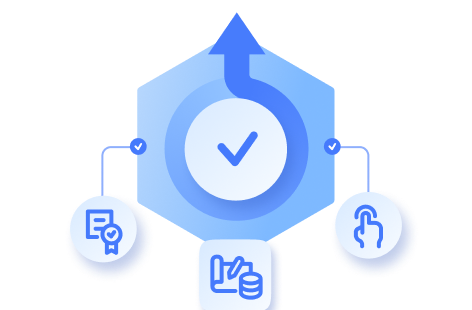

Check before ship


Logged


Merge and deploy
Patch when you can. Harden while you wait.
Minutes, not days
CVE to drafted PR in minutes.
Reduce exploitability
Close the attack path, not just the ticket.
Governed and auditable
Every change reviewed and logged.
Scale with confidence
Same workflow across every team.
One platform. The building blocks behind every fix.
Agentic vulnerability management is not a single agent. It is dashboards, tables, case management, agents, workflows, and the channels your team already works in, packed into one end-to-end solution.
Asset inventory, ownership, exceptions, and every scanner finding in one place the agents query.

Every remediation tracked as a case, from finding to verified close, with full history.
Reason over findings, prioritize by real exposure, and draft the fix in your conventions.
Deterministic execution. Pull data, enrich, open PRs, rescan, and verify.
forms
Owners request exceptions and submit context without leaving their tools.
Agents reach owners in Slack or Teams with the finding and the fix, and answer follow-ups in thread.
Scanners, cloud, ticketing, code hosts, and SIEM connected through one engine.

20 days vs 15 minutes.
Same CVE. Two response models. The difference is who closes the exploitation window first.
Traditional patching
CVE → Patch → Test → Deploy
Wait for the vendor. Wait for the maintenance window. Wait for QA. Hope no one weaponizes the patch faster than you can slot it in.
→
~20 days on average
Agentic hunting with Blink
CVE → Guardrail PR → Merge
The agent identifies affected assets, generates IaC and dependency PRs in your conventions, validates against team conventions, and routes to DevOps with full context.
→
Minutes to hours. Attack path closed first.
vs