.webp)
.webp)

Autonomous SOC Explained: Alert Triage to Full Response
An autonomous SOC pairs deterministic workflows with reasoning agents to triage, investigate, and respond. Analysts move to Tier 3 incidents, DFIR, and security engineering.

An autonomous SOC pairs deterministic workflows with reasoning agents to triage, investigate, and respond. Analysts move to Tier 3 incidents, DFIR, and security engineering.


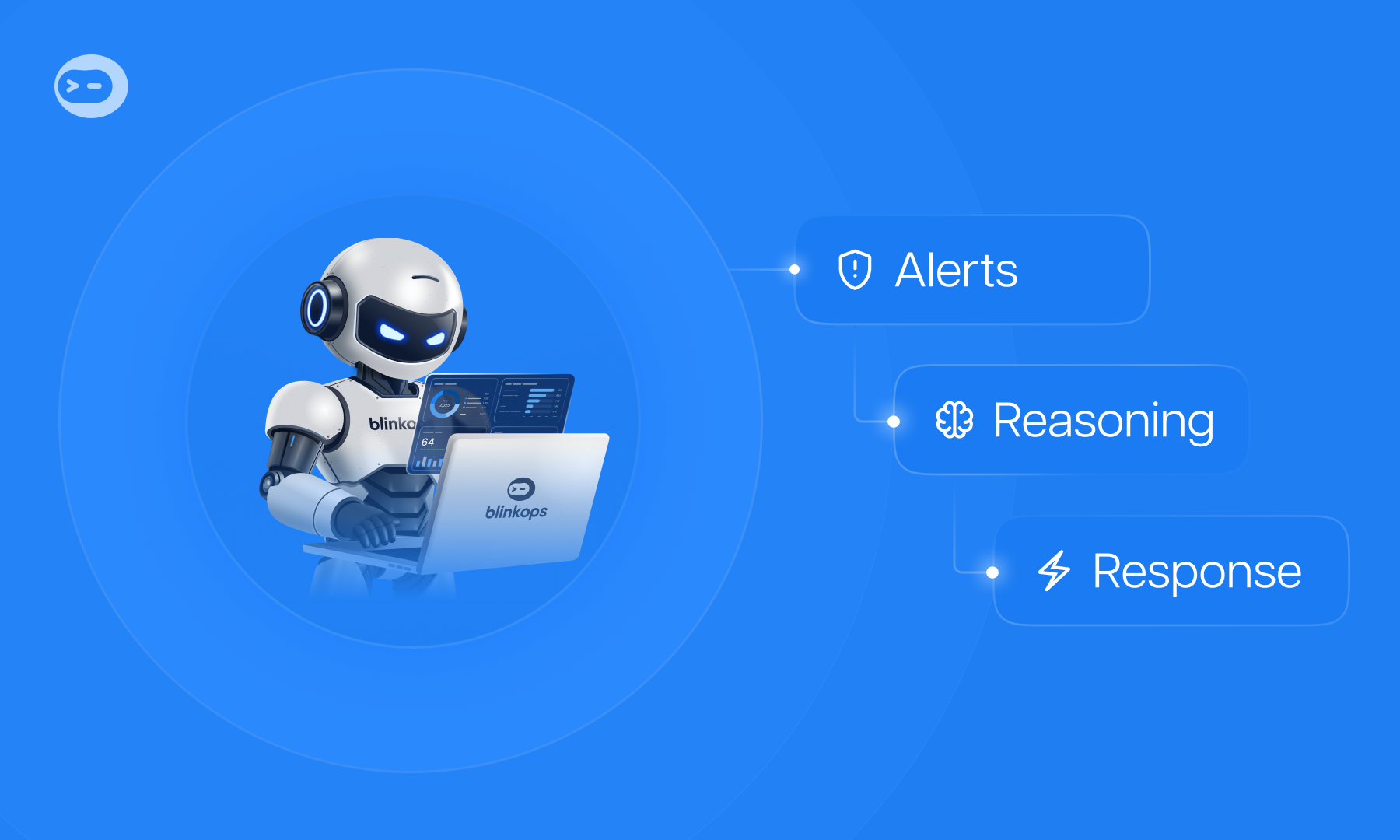
An autonomous SOC combines two things: deterministic automation and AI agents that can reason. Workflows handle the predictable steps. Agents handle the parts that need judgment: reading the evidence, correlating across tools, and deciding what to do next. Analysts stop reviewing every alert and move to the work that needs them: Tier 3 incident management, DFIR, and security engineering.
This guide covers how an autonomous SOC works from alert ingestion to response, what actually changes when you add agents, the components that make it trustworthy, and how to tell if your team is ready.
An autonomous SOC uses agentic AI and deterministic automation to triage, investigate, and respond to threats. Playbooks run the steps you already know. Agents reason through the alerts that don't fit a script. Analysts supervise, approve high-risk actions, and handle the incidents that need a human.
The word "autonomous" can sound like the AI runs unsupervised. In practice, a well-designed autonomous SOC pairs reasoning agents with platform-enforced bounds, human-in-the-loop approvals, and full auditability. Autonomy without governance is a liability. The goal is speed without losing oversight.
It is also the difference between using AI and integrating it. In the 2026 SANS SOC Survey, 79% of SOCs use AI or ML tools, but only 36% have built them into a defined SOC workflow. The rest is analysts pasting alerts into a chatbot with no structure, validation, or governance around it. An autonomous SOC is the 36%.
The terms sound similar, but they describe different operating models.
An automated SOC runs on deterministic playbooks. If an alert matches condition X, run action Y. This is a good model for known, repeatable work, and it's still the backbone of any serious SOC. The limit is simple: a playbook only knows the steps it was given. It can't reason about an alert it wasn't built for, and it can't decide what evidence to collect next. Anything outside the script lands on an analyst.
An autonomous SOC keeps the playbooks and adds reasoning. Agents read the alert and the enrichment, correlate across tools, and adapt based on what they find. They process alerts faster than a human and collect all the evidence needed before anyone looks at the case. They still work inside defined bounds.
Put another way: playbooks follow instructions, agents follow intent within constraints. You need both.
The pressure on SOCs is not new. Analysts review thousands of alerts a day and most are false positives. Manual review can't cover 24/7 operations, and the people to do it are not coming. In the 2025 ISC2 Cybersecurity Workforce Study, 63% of respondents report a staff shortage, and 59% report critical or significant skills needs, up from 44% in 2024. ISC2's own read is that the skills gap now matters more than headcount.
Automation helped, but it came with its own cost. Every new use case or tool change means someone builds and tests a SOAR playbook, and the backlog of requests never shrinks.
An autonomous SOC breaks the cycle by handling high-volume triage and routine response, and by making automation faster to build. The existing team focuses on work that needs human judgment.
Most of the marketing around AI SOC focuses on speed. Speed matters, but it's not the main shift. Here is what changes in practice.
Agents don't replace playbooks. You put an agent in the step that needs judgment and keep deterministic workflows around it. Enrichment stays deterministic. Deciding whether a weird login is an attacker or a contractor on a new laptop goes to an agent. Isolation goes back to a workflow with an approval gate.
This is the part that changes daily work for automation engineers. You describe the workflow, the LLM generates it, you review and adjust. Same for fixes: when a vendor changes an API response, you describe the change instead of rewriting parsing logic. Complex, multi-branch workflows that used to take weeks in low-code are now a conversation and a review.
Not everything starts with an alert. Threat hunting is a conversation with your data. DFIR is hours of processing evidence: timelines, memory dumps, logs from ten sources. Interactive agents let an analyst ask questions, pivot, and have the agent do the heavy processing while the analyst keeps control of the investigation.
SANS data shows why this matters. Most SOCs find threats because something flagged them: endpoint alerts (86%), SIEM alerts (78%), user reports (77%). Proactive hunting sits at 63%, and 16% of SOCs don't prioritize hunts at all. When hunting is ad hoc, the findings rarely make it back into detection engineering. An agent that runs the hunt inside case management fixes both problems: the hunt gets done, and the result gets recorded.
A lot of context lives in people's heads. Did you run this script? Is this your new device? Today that's a ticket with a list of questions and a wait. An agent can reach out to the user, ask, follow up on the answer, and attach the result to the case. The analyst sees the evidence, not the back and forth.
One useful frame is the SUDA loop: See, Understand, Decide, Act. Each stage runs on the cheapest execution tier that solves it. Deterministic workflows handle the predictable steps. Reasoning agents handle the ambiguous ones.
Alerts flow in from SIEM, EDR, cloud platforms, and identity systems. Workflows enrich each alert with asset criticality, user history, threat intelligence, and related events. This stage runs deterministically because the steps are predictable and repeatable. No reason to spend model tokens here.
Agents read the alert plus the enrichment and make the first call: false positive, needs investigation, or escalate now. Most of the volume drops off here. A well-tuned triage layer reduces the queue to a manageable set of suspicious events, and every verdict comes with the reasoning behind it.
This is where reasoning earns its keep. Agents go deep on a single alert and wide across systems. Is this user's behavior anomalous? Has this IP shown up anywhere else? What changed on this endpoint recently? When the answer lives with a person, the agent asks the person and brings the answer back.
Agents propose actions. High-risk actions require analyst approval. The agent might recommend isolating a host. A human confirms before anything runs.
Once approved, deterministic workflows execute: isolate the endpoint, block the IP, disable the account, open the ticket. This is exactly the kind of step you want to run the same way every time, inside pre-configured bounds.
Unified case management documents findings, links evidence to actions, and closes the loop. Analyst feedback improves future triage. Every step stays auditable for compliance and post-incident review.
This is also where your metrics come from. Number of incidents handled has been the top SOC metric for 10 years straight, cited by 70% of SANS respondents. It measures how busy you are, not how good you are. Time from detection to containment, thoroughness of eradication, and how many incidents were avoidable tell a better story, and case management is where those numbers live.
The lifecycle above depends on a few building blocks working together.
Pre-built, auditable automation for the See and Act stages. When you know exactly what to do, you want the system to do exactly that, every time. This is not the legacy part of the stack. It's the part that keeps the agents honest.
AI micro-agents interpret context and make recommendations in the Understand and Decide stages. They work inside defined bounds, not as unbounded black boxes. An agent without constraints is a risk, not an asset.
Agents an analyst can work with directly for threat hunting, evidence processing, and DFIR. Also the agents that talk to end users to collect context during an investigation.
The layer where workflows and agents get built, changed, and fixed by describing what you want. This is what keeps automation coverage growing instead of stuck in a backlog.
A central system of record that links alerts to evidence to actions. It supports auditability and compliance, and gives analysts the full picture of each investigation.
Broad connectivity across the stack (SIEM, EDR, cloud, identity) avoids lock-in and maximizes coverage. An autonomous SOC that only works inside one vendor's ecosystem limits itself.
This is the trust foundation. A harness is scoped tools, isolated execution, resource limits, and circuit breakers. These bounds execute below the model layer, where prompt injection can't reach. A guardrail is a request. A harness is a bound.
Agentic AI means software agents that perceive, reason, and act toward a goal. In a SOC, agents observe alerts, investigate context, recommend actions, and execute responses.
The design principle is efficiency: run each task on the cheapest execution tier that solves it. Deterministic automation handles ingestion and response. Small models handle enrichment and triage. Frontier reasoning handles complex investigation and decisions.
Agentic AI without a harness is a liability. Unbounded agents can be manipulated, can hallucinate, and can act outside their intended scope. The harness keeps agents inside defined boundaries, with every decision logged and auditable.
Agents process alerts continuously, with no queue. Response actions run inside platform-defined bounds as soon as they get approval.
Every alert gets the same depth of analysis, regardless of time of day, workload, or shift handoff. Consistency reduces the risk of a miss caused by human variability.
Tier 1 triage goes to agents. The people move to Tier 3 incident management, DFIR, and security engineering: detection engineering, automation, log coverage, and visibility. That's the work that improves your defenses, and it's where the skills gap is. ISC2 lists security engineering among the top skills teams can't find, and 25% of organizations already use AI and automation to cover skills shortages. SANS backs the retention side: meaningful work has been the top reason people stay for three years running, followed by career progression and training. Money is fourth.
Because workflows are built and fixed in natural language, coverage grows with the team's needs instead of waiting on a build backlog.
Agents extend capacity without proportional hiring. A force multiplier for the existing team, not a replacement for analysts.
Distrust is the right default. Don't trust an AI SOC. Verify it.
Reasoning models can hallucinate or miss context. SANS puts it bluntly: the biggest AI risk in the SOC is not a bad tool, it's an analyst who trusts one without checking. The mitigation is human approval for high-risk actions and full visibility into agent reasoning, so the analyst can challenge the output instead of accepting it.
Attackers will try to manipulate prompts. A platform-enforced harness executes bounds below the model layer, where prompt injection can't reach.
Agents are only as good as the data they can access. Vendor-neutral integrations and a unified data model give agents complete context.
Black-box decisions erode trust. Full transparency and an audit trail on every step are non-negotiable for production.
Most organizations go through stages rather than jumping to full autonomy.
Analysts review every alert by hand. High toil, low coverage, high burnout risk.
Deterministic playbooks handle routine tasks. A big improvement. But each new use case is a build project, and anything the playbook wasn't designed for still lands on an analyst.
Models surface recommendations, but analysts still decide and act. Triage gets faster, humans stay in the path for every decision.
Reasoning agents investigate and propose actions. Humans approve high-risk steps. Workflows and agents are built in natural language. This is where most teams land first.
Agents run end-to-end inside platform-enforced bounds. Humans supervise, handle exceptions, and work Tier 3, DFIR, and engineering.
An autonomous SOC builds on existing investments. SIEM provides telemetry and detection. SOAR provides automation. The autonomous SOC adds reasoning, natural language building, and governance on top of both.
Agentic SOAR is the next step for SOAR: from low-code to no-code to agentic. Teams keep their integrations and playbooks and layer reasoning agents onto them.
A few criteria matter more than the rest:
Blink is the BlinkOps Agentic Security Operations Platform (ASOP), the foundation for AI SOC and Agentic SOAR. It combines deterministic workflows with reasoning agents inside a platform-enforced harness.
Workflow Studio lets teams build automations in natural language and then adjust them with no-code, low-code, or full-code. Agentic Studio is where you build custom micro-agents with defined roles, knowledge, and bounds, including interactive agents for hunting and DFIR. Unified case management ties investigations together with full auditability.
With 30,000+ integrations, Blink stays vendor-neutral and works across the tools you already own. Agents reason. Workflows execute. The harness enforces.
Request a demo of the BlinkOps agentic security operations platform.
An AI SOC uses AI to assist security operations but may still rely on human-driven workflows. An autonomous SOC goes further: agents triage, investigate, and respond inside governed bounds, and humans supervise rather than execute every step.
Yes. Deterministic playbooks are the right tool for repeatable steps like enrichment and response execution. Agents sit in the steps that need reasoning. The autonomous SOC is both, not one instead of the other.
No. Tier 1 triage work goes to agents. Analysts move to Tier 3 incident management, DFIR, and security engineering. The team gets smaller queues, not smaller headcount.
It depends on your infrastructure, integration scope, and goals. Teams with a modern SIEM and SOAR can see value within weeks by layering reasoning agents onto existing workflows, and natural language building shortens the ramp for new use cases.
Yes. Autonomous SOC platforms can augment or replace legacy SOAR by adding reasoning agents and a platform-enforced harness while keeping existing integrations and playbook investments.
Blink is secure, decentralized, and cloud-native. Get modern cloud and security operations today.