Partners & Integrations
INtegration

Agentic Integration for Cyera

Deploy AI micro-agents that reason through Cyera's data security findings, classify risk across your data landscape, and automate remediation with defined guardrails. Or build deterministic workflows for repeatable, rule-based data security operations. Blink gives you both.

Agentify Cyera with Blink

Build micro-agents and agentic workflows that operationalize Cyera's data security intelligence across your entire stack. With BlinkOps, you can deploy purpose-built AI agents that triage data issues, assess classification risks, manage datastore posture, and enforce data governance at scale. Start from one of our agent templates or build your own from scratch.

Blink provides 53 out-of-the-box actions and a webhook trigger for Cyera.These actions serve as the building blocks for your agents and workflows, covering issues, datastores, classifications, policies, events, reports, projects, deployments, and webhook orchestration. Cyera is the industry-leading AI-native data security platform providing visibility, classification, and protection for sensitive data across cloud, SaaS, AI workflows, and on-premises environments. Blink turns those signals into action.
View the Docs

Security Micro-Agents for
Cyera

With BlinkOps' No-Code Security Micro-Agent Builder, you can deploy purpose-built AI agents that reason through Cyera's data security findings, make context-aware decisions, and execute response actions with defined roles and guardrails. Each agent is scoped to a specific domain, uses Cyera actions as its abilities, and operates within the constraints your team defines.

Data Security & DSPM

Data Issue Triage Agent

Abilities (Cyera actions used):
List Issues
List Issue Objects
List Issue Classifications
List Events
List Datastore Owners
List Datastore Classifications
Send Email To Issue Datastore Owner
Update Issue Status

Role:

Data Security Analyst responsible for triaging Cyera data security issues.

What it does:

When a Cyera webhook event fires for a new issue, this agent retrieves the full issue list, pulls related issue objects and classifications, and checks recent events for additional context. It identifies the affected datastores and their owners and builds a triage summary. It evaluates severity based on data sensitivity, classification type, and exposure context. For issues involving high-sensitivity data, it can send a notification directly to the datastore owner or escalate to the security team with a structured case. It also updates the issue status in Cyera to reflect triage decisions.

Constraints:

Does not resolve or close issues involving PII, PHI, or financial data without human approval. Must provide reasoning and evidence for every triage decision. Does not modify classification sensitivity without analyst review.

Sensitive Data Exposure Monitor Agent

Abilities (Cyera actions used):
List Datastores
List Datastore Classifications
List Datastore Owners
Assign Datastore Owners
Assign Owner To Datastore
Create Issues And Files Report

Role:

DSPM Analyst responsible for continuous monitoring of sensitive data exposure across datastores.

What it does:

This agent periodically lists datastores and their classifications, identifies datastores containing sensitive data categories (PII, credentials, financial records, health data), and cross-references datastore owners. When it detects a new datastore containing sensitive classifications that has no assigned owner, it assigns an owner based on the team or business unit responsible for the service. It generates exposure reports and flags any unowned sensitive datastores for immediate review.

Constraints:

Does not reassign datastore owners without explicit approval. Flags any datastore with no owner for immediate human review. Does not modify classifications or sensitivity levels.

Data Classification Governance Agent

Abilities (Cyera actions used):
List Classifications
Update Classification Sensitivity
List Policies
List Datastores
List Datastore Classifications
List Datastore Owners
Assign Datastore Owners
Create Issues And Files Report

Role:

GRC Analyst responsible for maintaining classification accuracy and sensitivity standards across the data landscape.

What it does:

This agent monitors classification consistency by listing all classifications and their assigned sensitivity levels. It identifies mismatches where high-risk data types carry low sensitivity ratings, or where new classifications have been created without proper sensitivity assignment. When drift is detected, it generates a governance report and can update classification sensitivity to align with organizational policy. It also reviews datastore ownership assignments to ensure that all datastores with regulated data have an accountable owner on record.

Constraints:

Does not downgrade classification sensitivity without GRC team approval. Reports all sensitivity changes with a clear audit trail. Escalates any classification involving regulated data categories (HIPAA, PCI, GDPR) for manual review.

SOC & Incident Response

Data Breach Scoping Agent

Abilities (Cyera actions used):
Cyera Custom Action (identities endpoint: list identity, list datastores accessible by identity)
List Datastores
List Datastore Objects
List Datastore Classifications
List Datastore Owners
List Issues
List Issue Objects
Update Issue Status
Send Email To Issue Datastore Owner
Create Issues And Files Report

Role:

Incident Responder responsible for scoping the blast radius of data-related security incidents starting from the compromised identity.

What it does:

When a data breach or unauthorized access is suspected, this agent starts with the compromised identity, not the datastores. It uses Cyera's identities endpoint (via Custom Action) to identify the user or service account involved, then lists all datastores that identity has access to. For each accessible datastore, it pulls classifications and objects to determine what sensitive data the identity could have reached. It identifies datastore owners who need to be notified and generates a structured blast radius report. The report maps the path from identity to data: who had access, to what, with what sensitivity, and who owns it.

Constraints:

Cannot close or resolve issues during an active investigation. Must generate a full blast radius report before any notifications are sent. Does not modify datastore owners or classifications during incident response. Identity lookups are read-only.

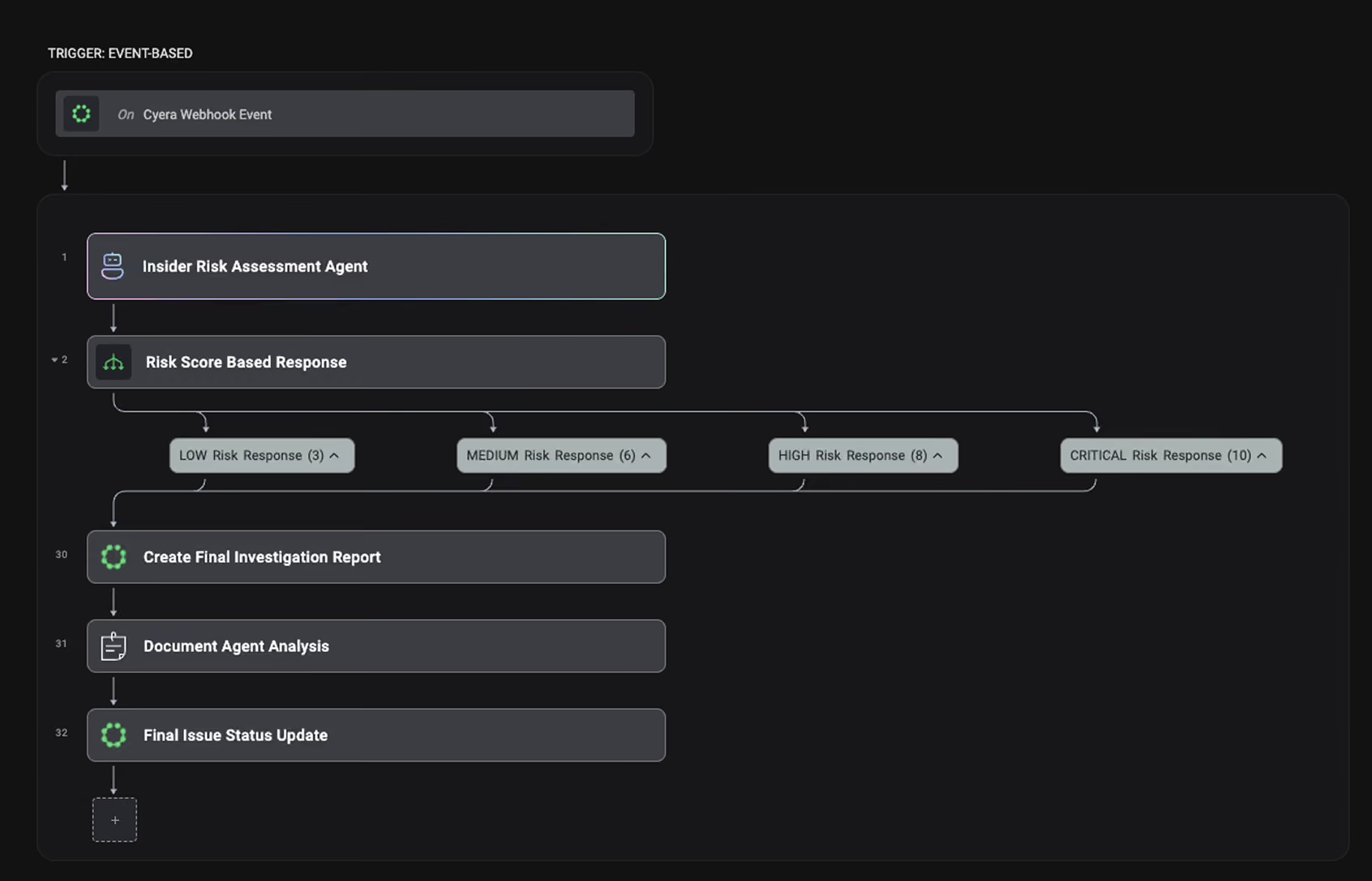
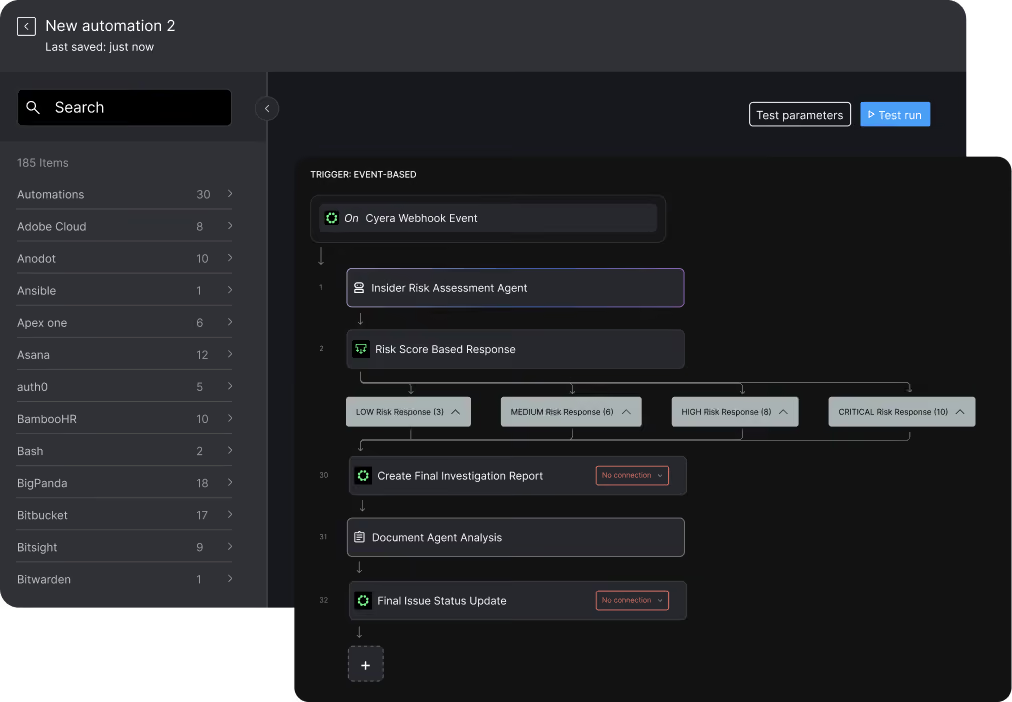
Featured Workflow: Insider Risk Assessment and Response

This workflow demonstrates how BlinkOps combines AI micro-agents with deterministic workflow steps to handle insider risk scenarios end-to-end. The agent handles the reasoning. The workflow handles the execution.

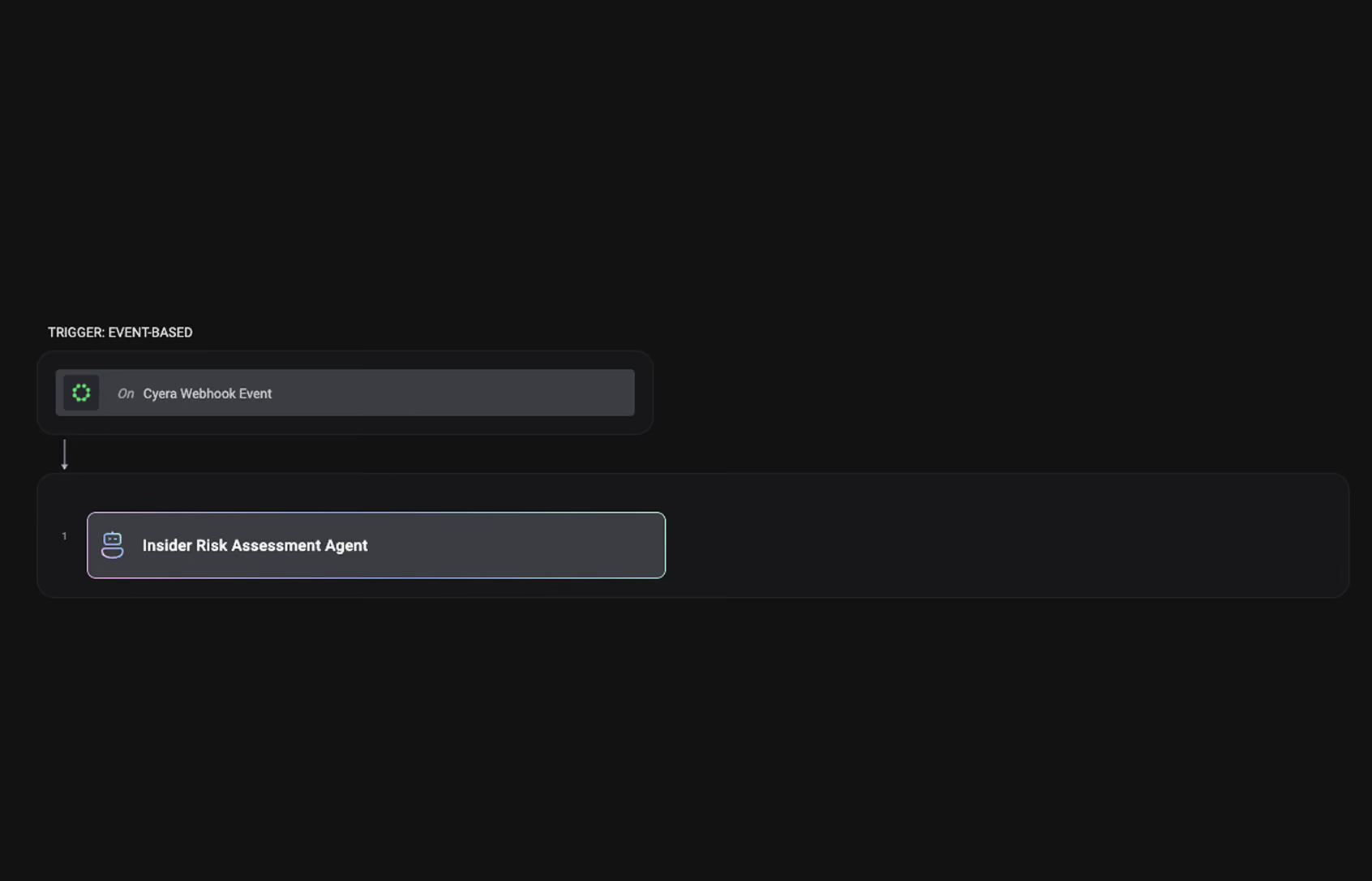
Trigger
STEP 1

Agent — Insider Risk Assessment (AI Reasoning)

  • The Insider Risk Assessment Agent receives the webhook payload and begins its investigation

    • Retrieves the issue details and lists related issue objects and classifications from Cyera
    • Checks recent events via List Events for additional context around the issue
    • Uses Cyera's identities endpoint (via Custom Action) to identify the user or service account associated with the issue
    • Maps all datastores that identity has access to, revealing the full access scope
    • Pulls classifications for each accessible datastore to determine the sensitivity of data within reach
    • Evaluates risk based on: sensitivity of the data in the triggered issue, total number of high-sensitivity datastores the identity can access, whether the identity has access to datastores with regulated data (HIPAA, PCI, GDPR)
    • Assigns a risk score: LOW, MEDIUM, HIGH, or CRITICAL
    • Outputs a structured risk assessment with: risk score, affected identity, triggered datastore, full access scope, data classifications involved, reasoning, and recommended action
Cyera actions used in this step:
List Issues
List Issue Objects
List Issue Classifications
List Events
Cyera Custom Action (identities endpoint)
List Datastores
List Datastore Classifications
List Datastore Owners
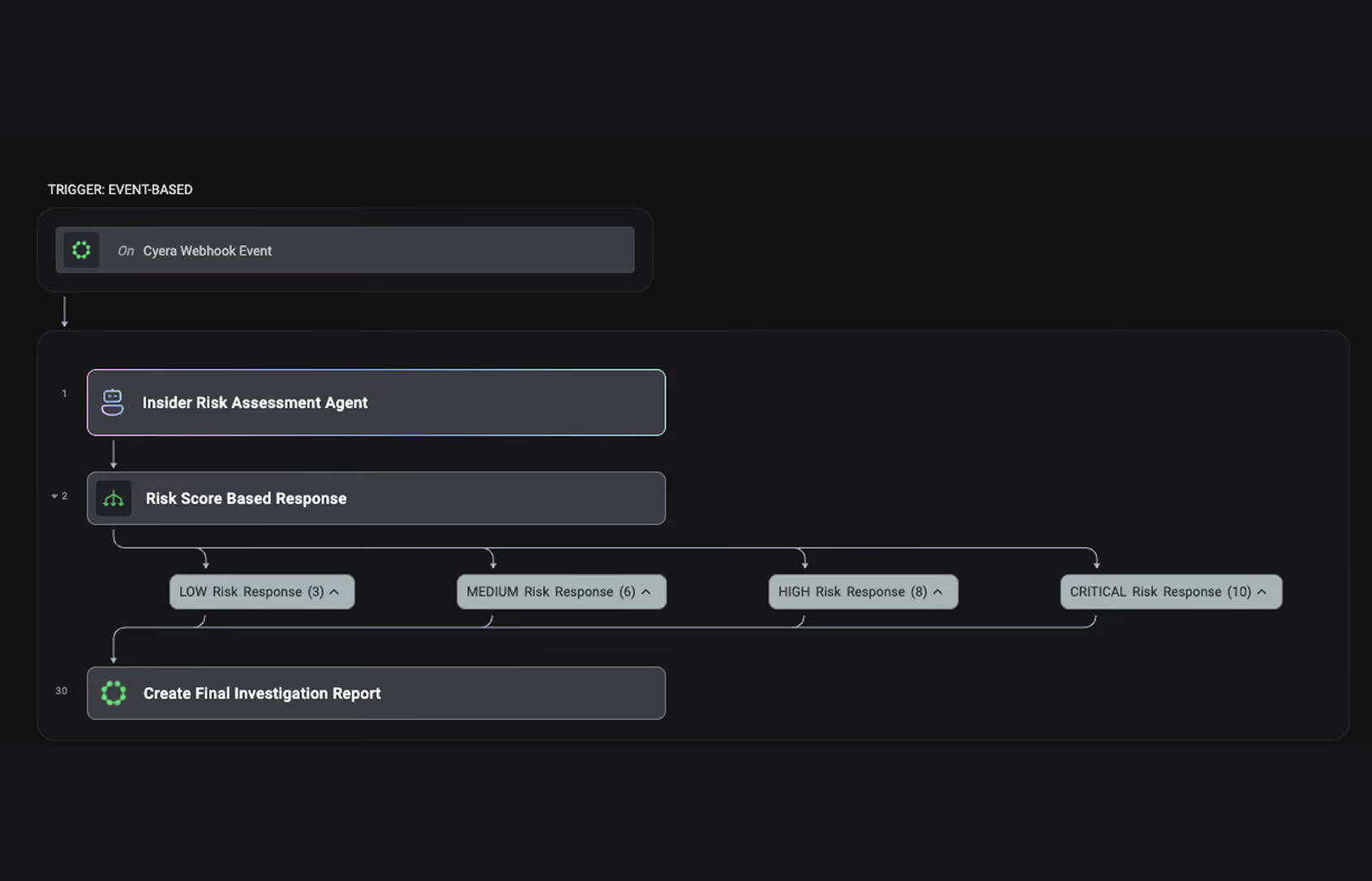
STEP 2

Conditional Branch (Deterministic)

Based on the agent's risk score output, the workflow branches:
  • If risk score = LOW

    • Update Issue Status in Cyera to "Reviewed - Low Risk"
    • Log the event to case management
    • No further action
  • If risk score = MEDIUM

    • Update Issue Status in Cyera to "Under Review"
    • Send Email To Issue Datastore Owner via Cyera with the agent's finding summary
    • Send Slack notification to the security operations channel with the risk assessment
    • Create a case in ServiceNow or Jira for analyst follow-up
    • Log the event to case management
  • If risk score = HIGH or CRITICAL

    • Update Issue Status in Cyera to "Escalated - Active Investigation"
    • Send Email To Issue Datastore Owner via Cyera with incident notification
    • Send Slack notification to the insider threat team with full risk assessment and identity access scope
    • Suspend User in Okta or Revoke User Sessions in Microsoft Entra ID (with human-in-the-loop approval for CRITICAL)
    • Create Issues And Files Report in Cyera for evidence preservation
    • Create a P1 case in ServiceNow or Jira with the full agent reasoning, identity access map, and evidence
    • Log the event to case management
STEP 3

Documentation (Deterministic)

Regardless of risk score, the workflow:
  • Creates an Issues And Files Report in Cyera capturing the full investigation
  • Appends the agent's reasoning and risk assessment to the BlinkOps case
  • Updates the issue status in Cyera to reflect the final disposition
  • This Demonstrates the agent handles the judgment call

    Given this data issue, how much sensitive data can this identity actually reach? An issue involving a service account with access to three PII datastores is a different risk profile than one involving a user with access to a single staging environment. The agent maps the full blast radius from identity to data, not just the single triggered event.

    The deterministic steps handle the execution: updating statuses, sending notifications, suspending accounts, and creating tickets.

    These actions need to run the same way every time, with no variation. 
This is the hybrid model: agent reasoning plus deterministic reliability. The agent decides what to do. The workflow does it.

Cross-platform integrations used:
Cyera (issue management, datastore operations, reporting)
Okta or Microsoft Entra ID (identity containment)
Slack (real-time notifications)
ServiceNow or Jira (case tracking)
BlinkOps Case Management (operational tracking)

Automated Workflows for
Cyera

For structured, repeatable tasks that need to run the same way every time, BlinkOps offers deterministic workflows built on the same Cyera actions. No reasoning required, just reliable execution on a defined path.

In the BlinkOps library, we have compiled 8,000 automations that customers can download and run instantly. These automations include workflows for cloud security, compliance, identity & access management, network security, SOC & incident response, and threat hunting.

Available
Actions

Blink supports the following actions for Cyera

Issues & Findings

  • List Issues
  • List Issue Objects
  • List Issue Classifications
  • Update Issue Status
  • Send Email To Issue Datastore Owner
  • Create Issues And Files Report

Events & Streaming

  • List Events
  • Stream Events
  • Stream All Tables
  • Get Table

Projects

  • List Projects
  • Get Project
  • Create Project
  • Update Project
  • Delete Project

Trigger

  • Cyera Webhook Event — Listen for data security events and issue notifications from your Cyera environment in real time.

Datastores

  • List Datastores
  • List Datastore Objects
  • List Datastore Owners
  • List Datastore Classifications
  • List Datastore User Tags
  • Add User Tag To Datastore
  • Remove Datastore User Tag
  • Remove All Datastore User Tags
  • Assign Datastore Owners
  • Assign Owner To Datastore
  • Remove Datastore Owner
  • Scan Datastore
  • Scan Datastore By Cloud Provider URL
  • Update Datastore Scan Settings

User Tags

  • List User Tags
  • Get User Tag
  • Create User Tag
  • Update User Tag
  • Delete User Tag

Deployments

  • List Deployments
  • Get Deployment
  • List Deployment Networks
  • Deploy Server Or Database

Classifications & Policies

  • List Classifications
  • Update Classification Sensitivity
  • List Policies

Reports

  • Create Files Report
  • Get Report
  • List Reports
  • Create Report Download Link

Domain & Email Registration

  • Register Domain
  • Get Domain Verification Status
  • Register Email
  • Get Email Verification Status
  • Get Public Key

Webhooks

  • List Webhooks
  • Subscribe To Webhook
  • Delete Webhook
  • Cyera Custom Action

Related Partners

Connect to anything

Blink offers thousands of pre-built integrations across leading security vendors so you can start automating instantly.

Explore Integrations
Blink integrations - logos in a grid