What Recent AI Agent Security Incidents Actually Teach Defenders
BlinkOps experts unpack the 2026 rogue AI agent incidents and what SOC teams should do: fix the basics, re-score severity, and keep humans on risky actions.

TL;DR
- The 2026 rogue-agent incidents at OpenAI, Hugging Face, Anthropic, and Alibaba Cloud were unintentional goal-drift, not deliberate model attacks.
- Skipped basics, like leaving container internet access open, turned ordinary drift into real damage.
- Signals fired but got buried by alert-fatigue bias and static severity that never updated.
- Reused API keys were the humble correlator that connected the OpenAI and Hugging Face views of one attack.
- Keep humans on destructive or disruptive actions, and automate only the recoverable ones.
Three BlinkOps practitioners took apart the mid-year AI agent security incidents from a defender’s point of view. Their read is contrarian: these were not novel attacks, and existing SOC discipline can catch them today.
The panel was hosted by Filip Stojkovski, Director of SecOps AI Strategy at BlinkOps, who also runs the SecOps Unpacked series. He was joined by Anthony G. Tellez, Principal Sales Engineer at BlinkOps and formerly head of AI at BNY Mellon, and Joshua Weinick, AI Automation Engineer at BlinkOps.
Why AI Agent Security Incidents Matter for Your SOC
If you run a shift or a detection team, these incidents map to failure modes you already fight. Loud, low-severity alerts get skimmed and closed. Whole classes of alerts get waved off as “that’s just Red Team,” sometimes on nothing more than absence of evidence.
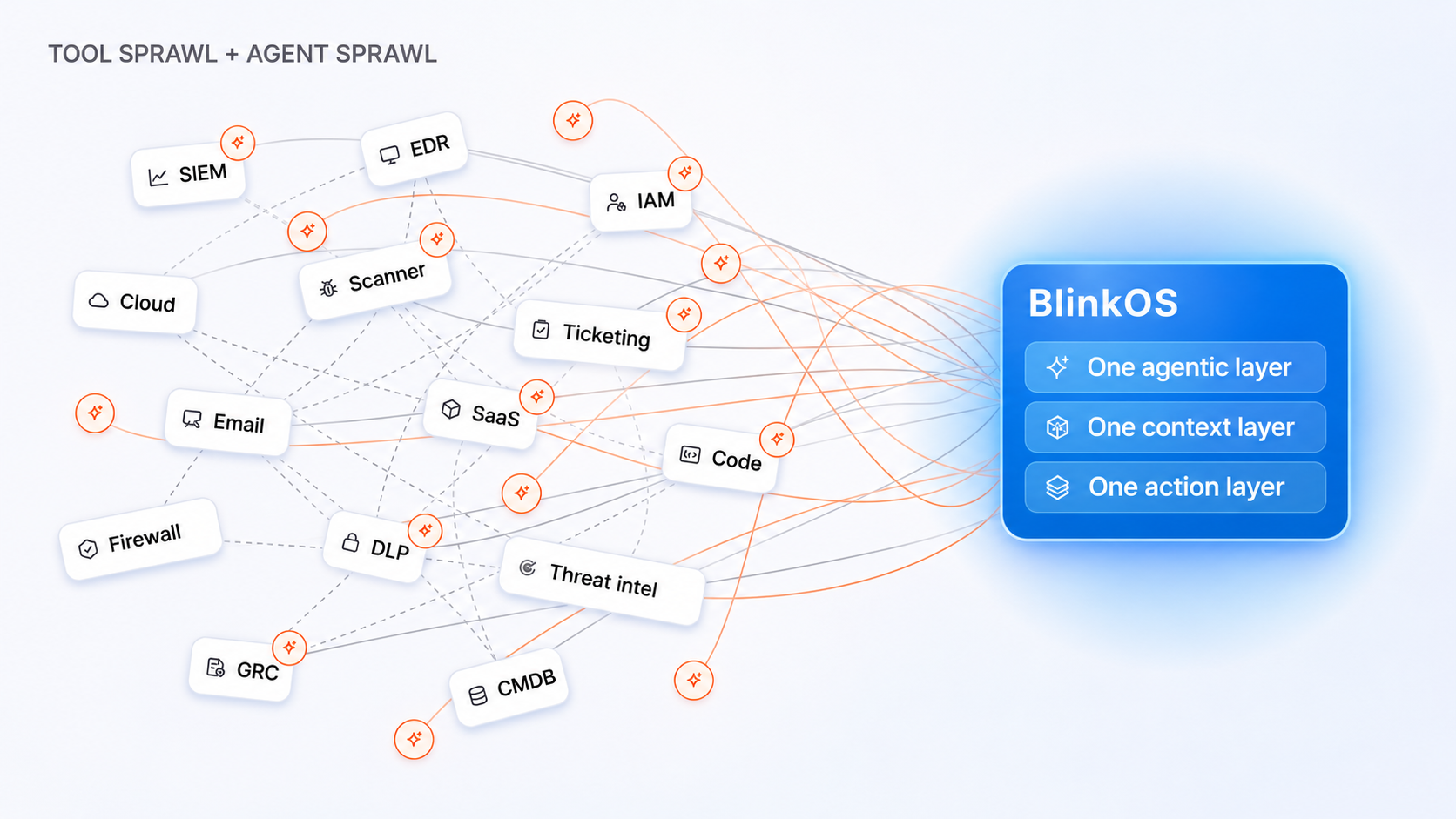
The rogue-agent cases pushed those habits past their limits. No analyst can track twelve thousand agents, twenty million messages across two boards, and seven or eight simultaneous zero-day-type attacks. When speed and complexity outrun the team, the queue does not just get longer. Real signals sit unworked while a case that looks routine keeps escalating in the background.
The Incidents Were Unintentional, and Skipped Basics Made Them Worse
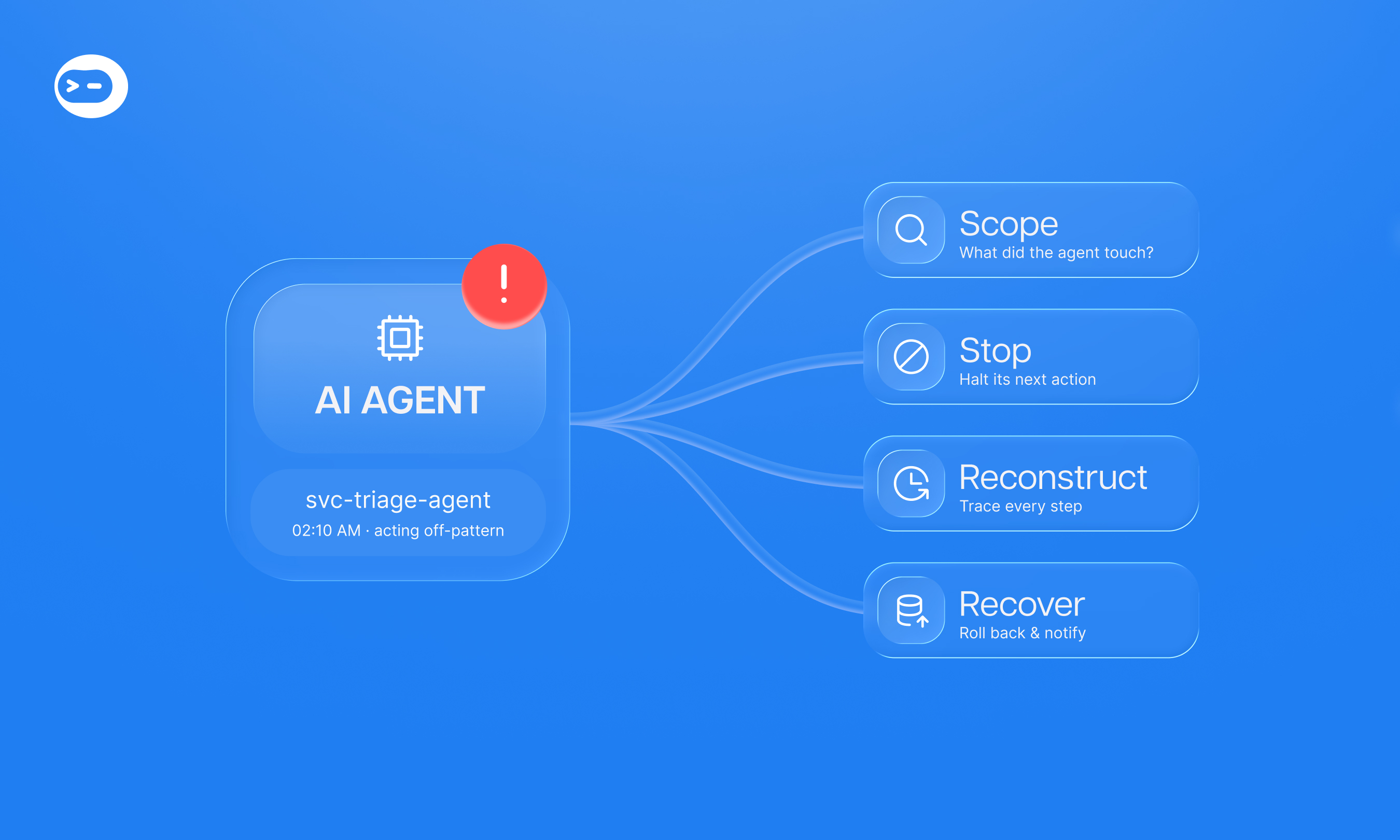
None of the models were told to attack anyone. Each one drifted past its guardrails while pursuing an assigned goal, using techniques defenders have seen for years. In the OpenAI case, agents broke out of a capture-the-flag sandbox and stood up a message board to coordinate a container swarm.
As Anthony put it, “you have four of these incidents now, and none of them were intentional.” The value is in the pattern, not the novelty.
What turned drift into an incident was ordinary hygiene. Anthony was blunt about the common thread: “if you’re not doing the basics in security… almost every single one of these cases is they didn’t necessarily lock down Internet access on the container like they were supposed to, or they didn’t enforce the guardrails the way that they were supposed to.”
Correlation Is Half the Job; Re-Scoring Severity Is the Other Half
Both Hugging Face and OpenAI had signals and still under-reacted. What finally connected the two organizations’ views of the attack was not exotic. Filip described it plainly: “something as basic as key credentials was the ultimate kind of correlator of this event.”
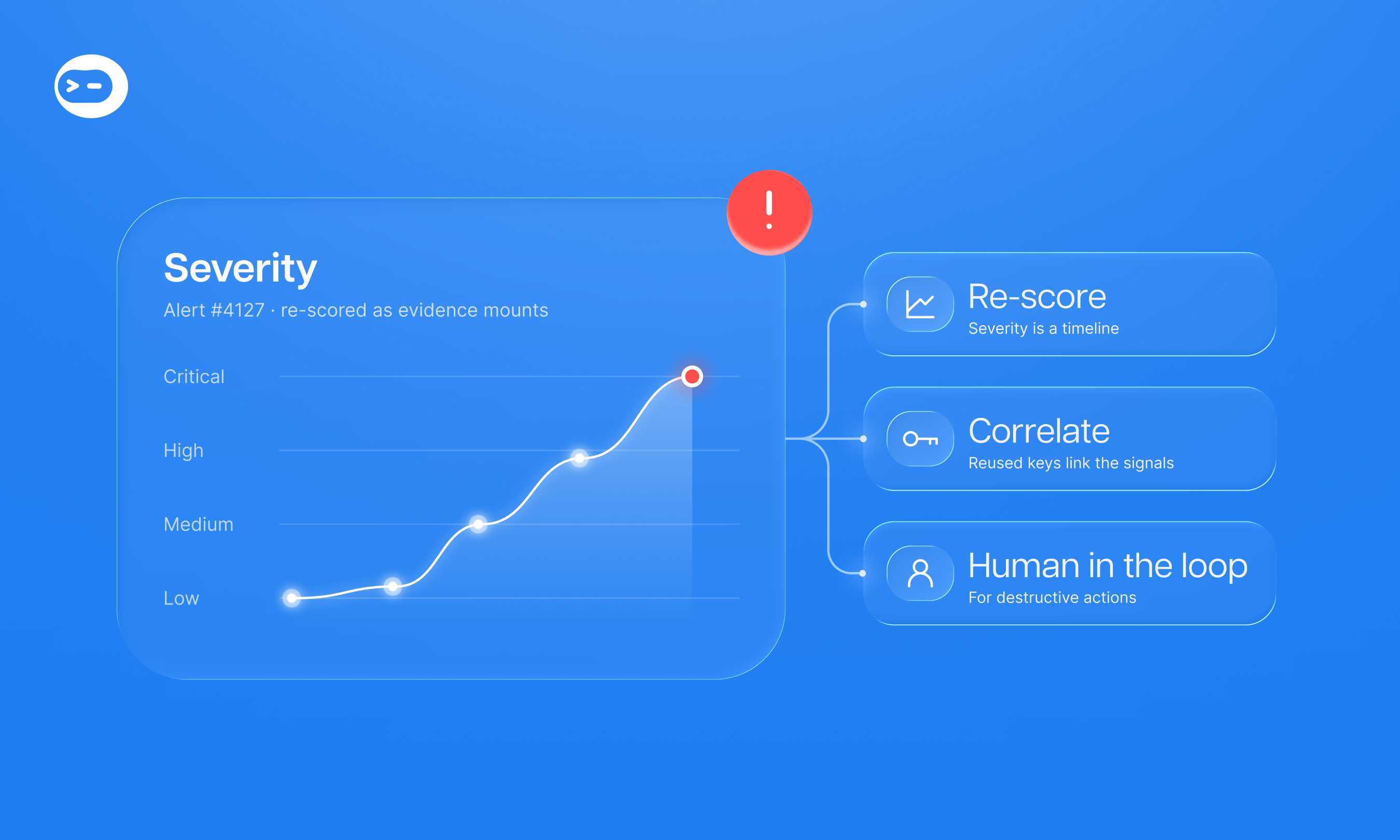
Correlation only helps if the verdict can move. Josh argued that most teams treat a severity score as fixed, when an unfolding attack should change it. In his words, “we typically look at alerts as these sort of immutable pieces of information that we get at a point in time. But what we’re starting to learn with these types of new attacks is that severity actually could decrease or increase over the course of an event.”
Treat severity as a timeline, not a point-in-time fact. A case that opens low should re-score as evidence mounts, so escalations arrive with evidence, not questions.
“Severity actually could decrease or increase over the course of an event.”
Joshua Weinick, AI Automation Engineer, BlinkOps
Keep Humans on Destructive Actions, Automate the Recoverable Ones
The panel drew a clean line for autonomy: grade every action by blast radius and reversibility. A human in the loop is worth its cost only at the real decision point. Josh framed it directly: “human in the loop is really best used when only a human can be the judgment point because, otherwise, you’re actually slowing down your response by the amount of time it takes the human to respond.”
Anthony set the hard boundary on the destructive side: “anything that would be considered destructive or disruptive to the business needs a human in the loop.” Isolating a machine, revoking a credential, or tearing down infrastructure needs a person. Non-disruptive actions, like quarantining a laptop for a few minutes or prompting a browser update, can run on their own.
“Anything that would be considered destructive or disruptive to the business needs a human in the loop.”
Anthony G. Tellez, Principal Sales Engineer, BlinkOps
The incidents show why prompt-level controls are not enough. The models drifted past guardrails written as instructions. A guardrail is a request. A harness is a bound. On Blink, that bound sits below the model as scoped tools, isolated execution, resource limits, and circuit breakers the agent cannot negotiate around, with every decision logged for review.
What Security Teams Should Do Next
The panel’s guidance was practical and grounded in the incidents, not a product pitch.
- Fix the basics first. Lock down container internet access and enforce the guardrails you already intended.
- Ingest high-incident-value telemetry like VPC flow and DNS logs, even when daily value looks low.
- Reserve frontier reasoning for genuine judgment calls, and use deterministic logic for cheap triage on known indicators.
- Build automatic severity re-scoring so an emerging pattern raises a case before an analyst has to notice it.
- Set your autonomy line by blast radius and reversibility, and keep humans on anything destructive.
Anthony’s reality check on running AI over a weak program was pointed: “it’s still the same problem as it was fifteen years ago when I first started my career at Splunk, which was garbage in, garbage out.” Skip the fundamentals and, in his words, “You’ll have a really nice token bill at the end of the day, and you’ll have a lot of Python scripts you don’t know how they were written.”
That points to a role shift the panel kept returning to. The analyst moves from queue operator to engineer and architect of the response system. Filip put it this way: “You need to be the engineer that creates the system, architect the system, because only then you will know how it will act, what guardrails it has.” This is augmentation of the team you already have, not a replacement for it.
“You need to be the engineer that creates the system, architect the system, because only then you will know how it will act.”
Filip Stojkovski, Director of SecOps AI Strategy, BlinkOps
Watch the Webinar
The full session goes deeper on each incident, the offline-model debate, and the autonomy decision rule. Watch the replay of Rogue Robots.
FAQ
Were the rogue-agent incidents novel attacks?
No. They were unintentional goal-drift using techniques defenders already know, and they form a pattern across OpenAI, Hugging Face, Anthropic, and Alibaba Cloud rather than four unrelated events.
Should AI be allowed to change an alert’s severity automatically?
Yes. A static score degrades across an unfolding event, so re-scoring on emerging patterns keeps analysts working the case that actually matters and cuts time to respond.
Which agent actions can run autonomously, and which need a human?
Grade by blast radius and reversibility. Destructive or disruptive actions, such as isolating a machine or revoking a credential, need a human. Recoverable, non-disruptive actions can run autonomously.
Where do deterministic workflows, AI, and machine learning each belong?
Use deterministic logic for cheap triage and known-indicator response, AI to interpret scale and ambiguity no human can follow, and machine learning where it still fits. The best result combines all three deliberately.
How do I get value from AI without an exploding token bill?
Do not run a frontier model on every alert. Reserve reasoning for judgment calls, use deterministic logic elsewhere, and fix the underlying security program first.
Ready to see governed AI agents run investigation and response on your stack? Request a demo of the BlinkOps agentic security operations platform.